Disaster Management.
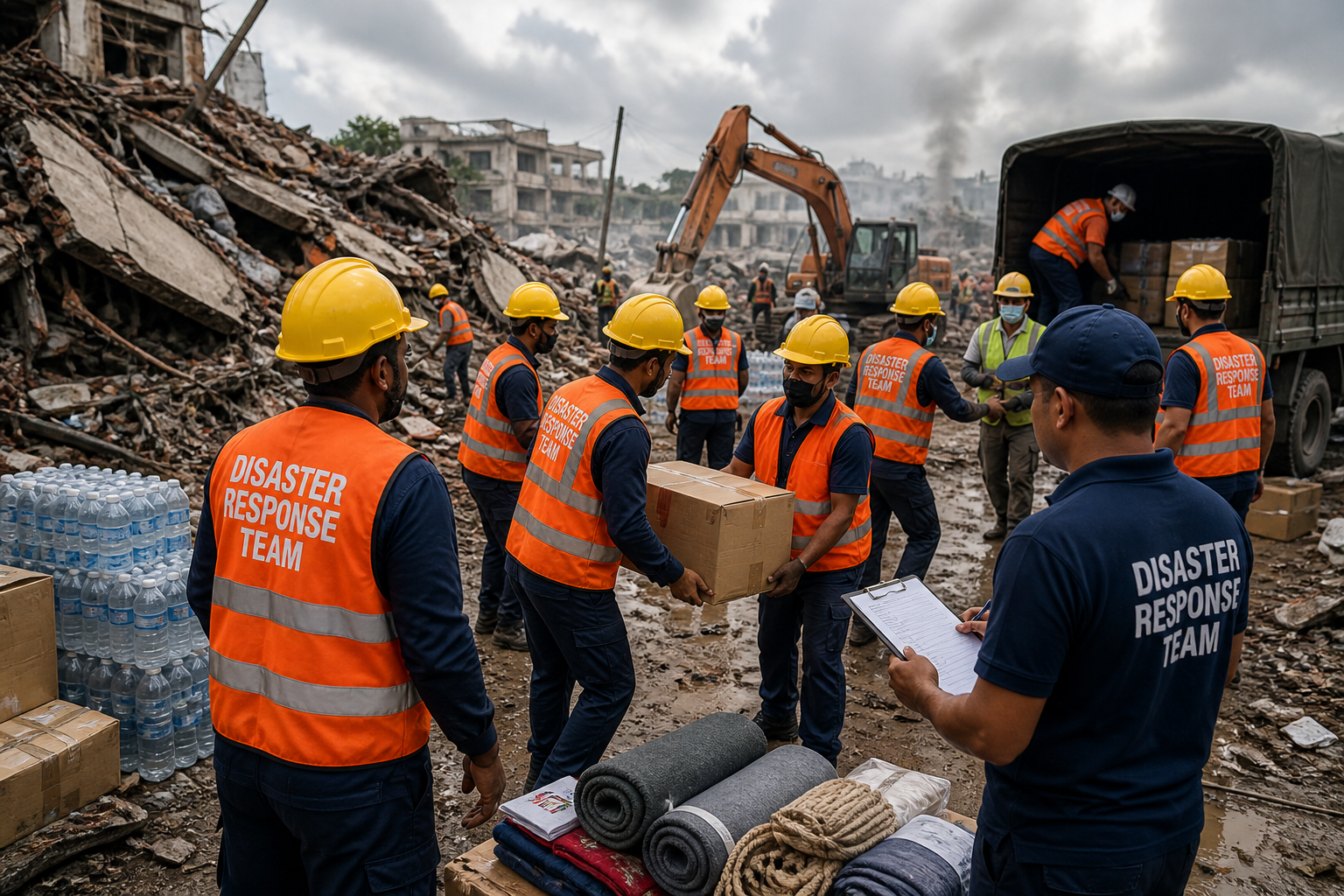
Supply chains for disaster management are specialized ecosystems that provide everything from individual survival kits to heavy-duty industrial rescue gear. Whether you are building a personal “Go Bag,” outfitting a facility, or sourcing for a government agency, the supply landscape is generally categorized into four tiers.
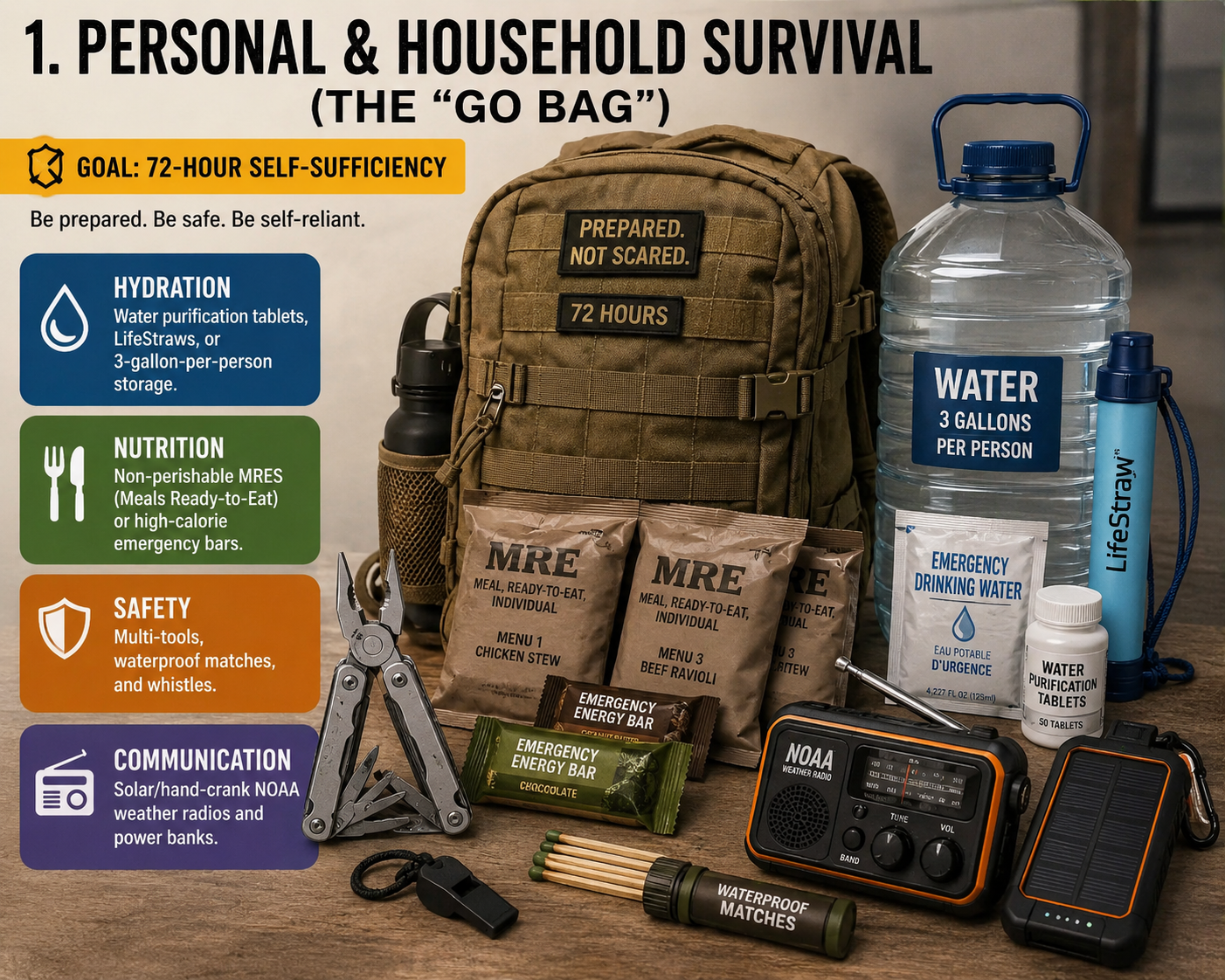
1. Personal & Household Survival (The “Go Bag”)
For individuals, the goal is 72-hour self-sufficiency. These items are typically sourced from outdoor retailers or specialized emergency supply vendors (e.g., Ready gov standards).
- Hydration: Water purification tablets, LifeStraws, or 3-gallon-per-person storage.
- Nutrition: Non-perishable MRES (Meals Ready-to-Eat) or high-calorie emergency bars.
- Safety: Multi-tools, waterproof matches, and whistles.
- Communication: Solar/hand-crank NOAA weather radios and power banks.
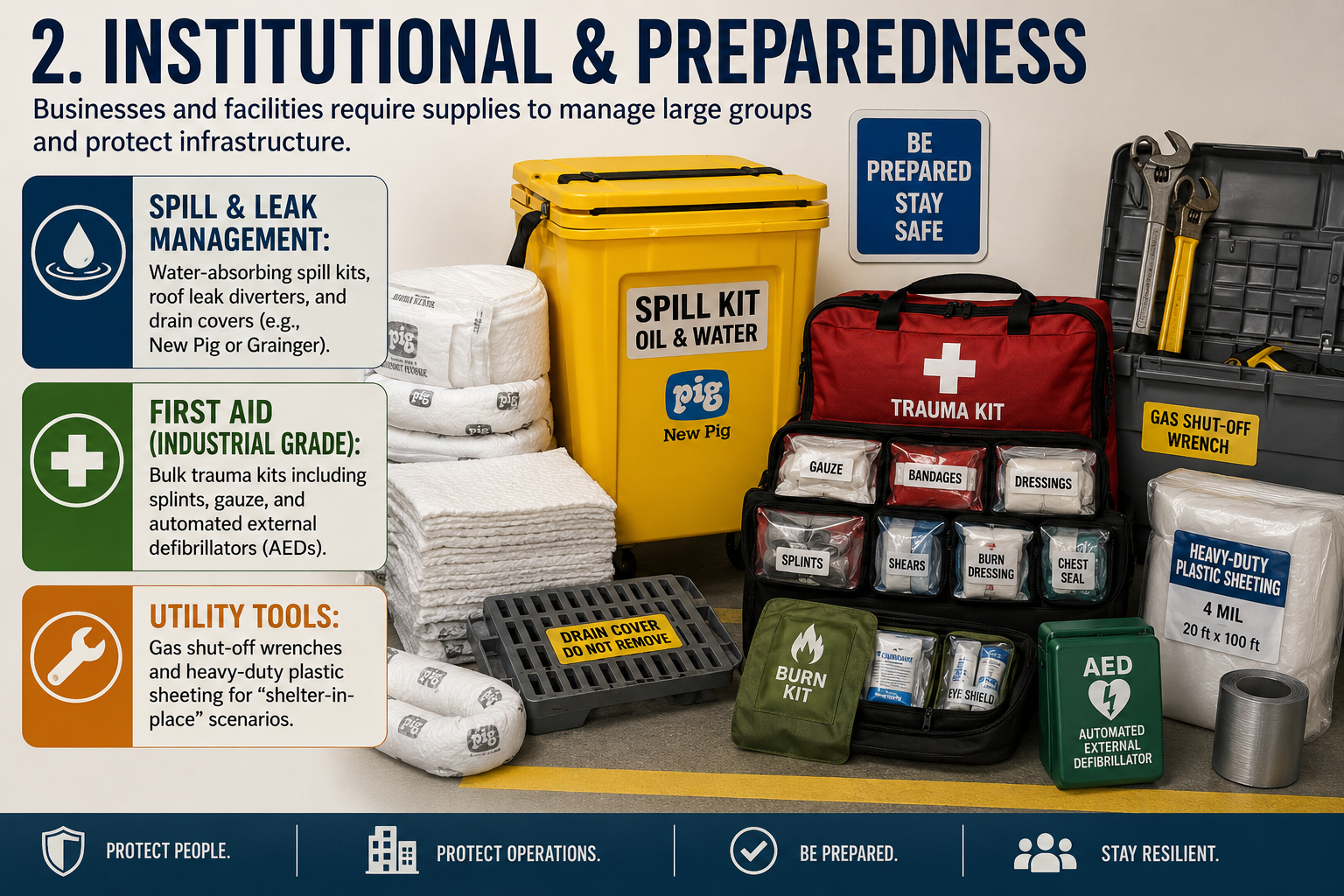
2. Institutional & Preparedness
Businesses and facilities require supplies to manage large groups and protect infrastructure.
- Spill & Leak Management: Water-absorbing spill kits, roof leak diverters, and drain covers (e.g., New Pig or Grainger).
- First Aid (Industrial Grade): Bulk trauma kits including splints, gauze, and automated external defibrillators (AEDs).
- Utility Tools: Gas shut-off wrenches and heavy-duty plastic sheeting for “shelter-in-place” scenarios.
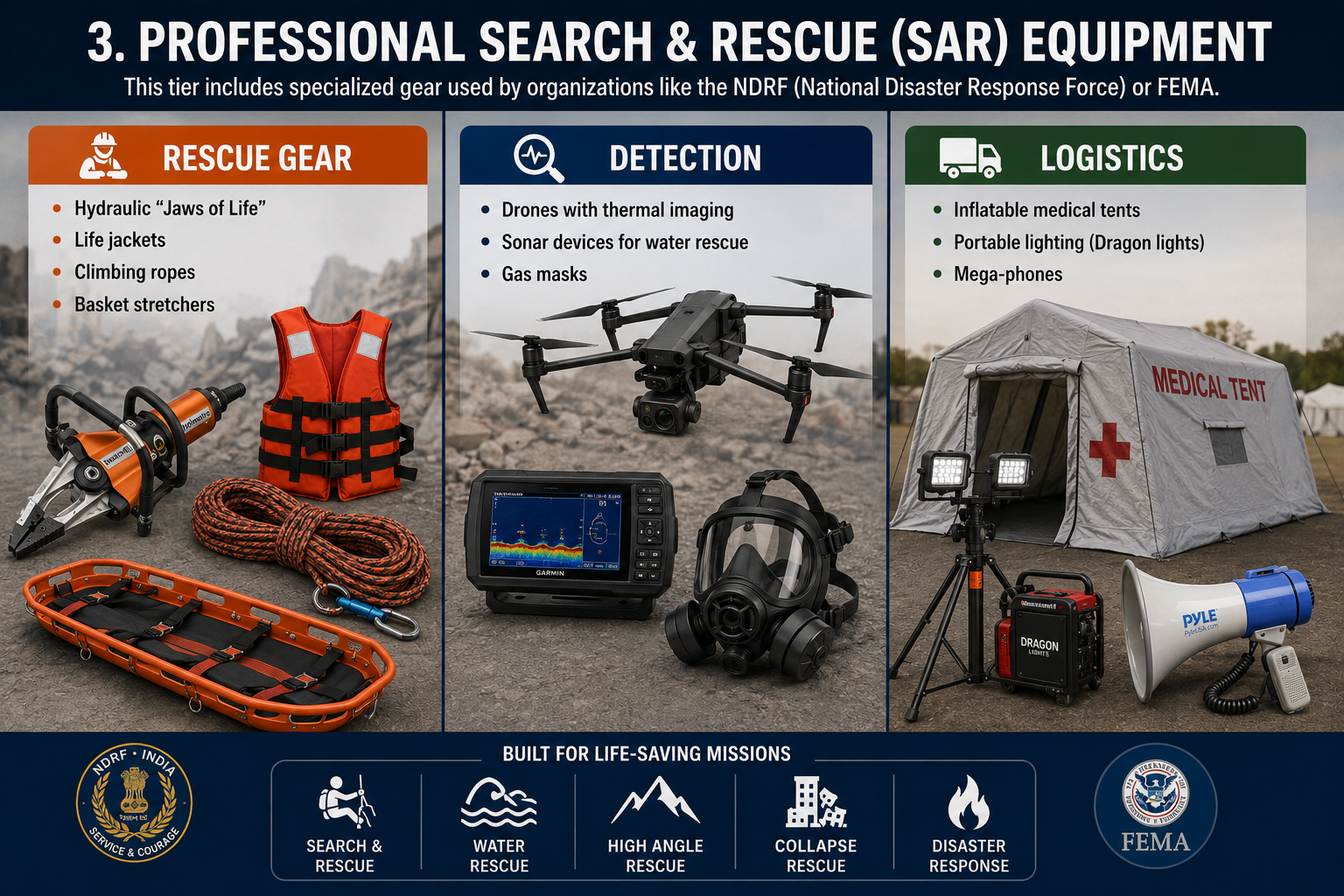
3. Professional Search & Rescue (SAR) Equipment
This tier includes specialized gear used by organizations like the NDRF (National Disaster Response Force) or FEMA.
- Rescue Gear: Hydraulic “Jaws of Life,” life jackets, climbing ropes, and basket stretchers.
- Detection: Drones with thermal imaging, sonar devices for water rescue, and gas masks.
- Logistics: Inflatable medical tents, portable lighting (Dragon lights), and mega-phones.
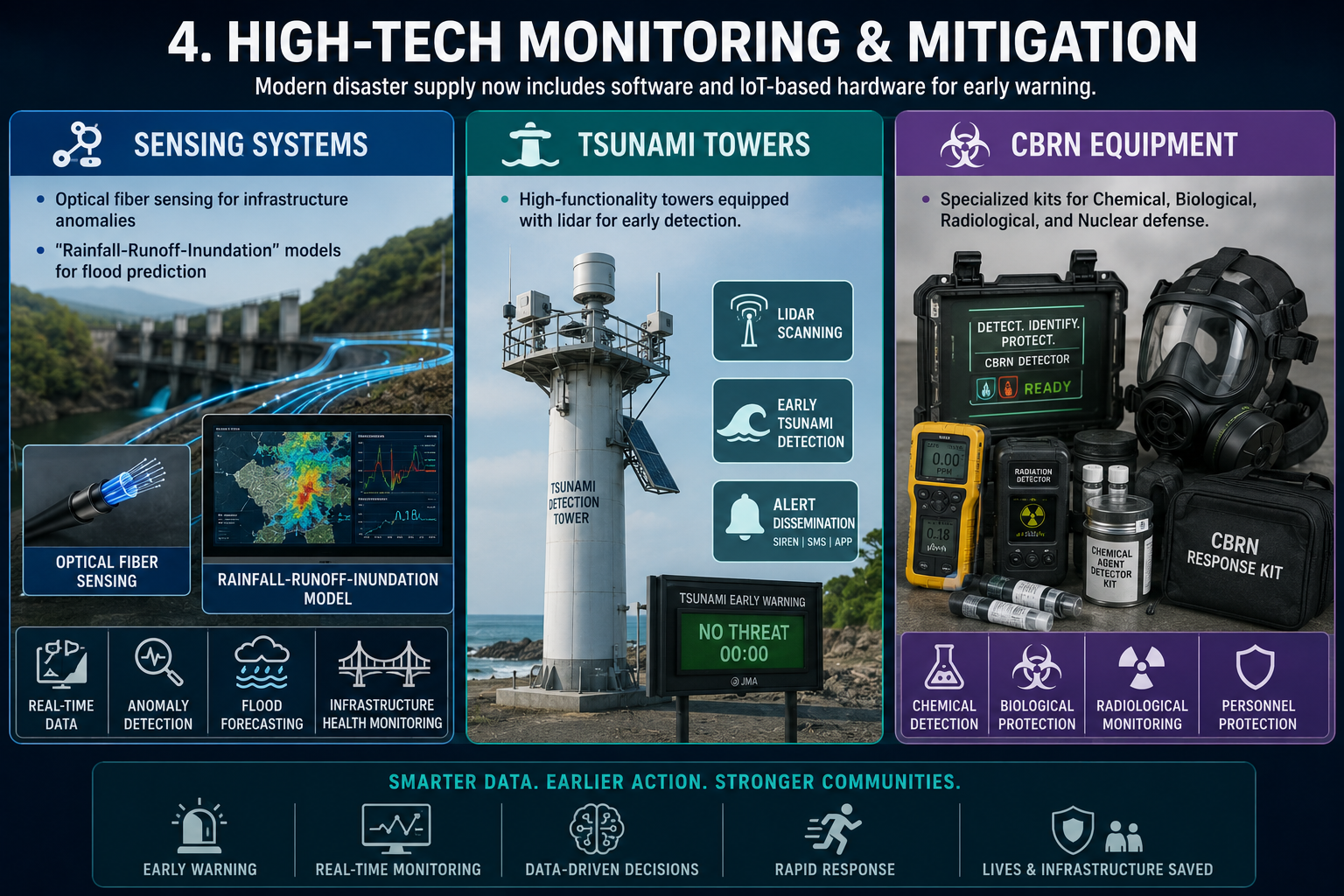
4. High-Tech Monitoring & Mitigation
Modern disaster supply now includes software and loT-based hardware for early warning.
- Sensing Systems: Optical fiber sensing for infrastructure anomalies and “Rainfall-Runoff-Inundation” models for flood prediction.
- Tsunami Towers: High-functionality towers equipped with lidar for early detection.
- CBRN Equipment: Specialized kits for Chemical, Biological, Radiological, and Nuclear defense.
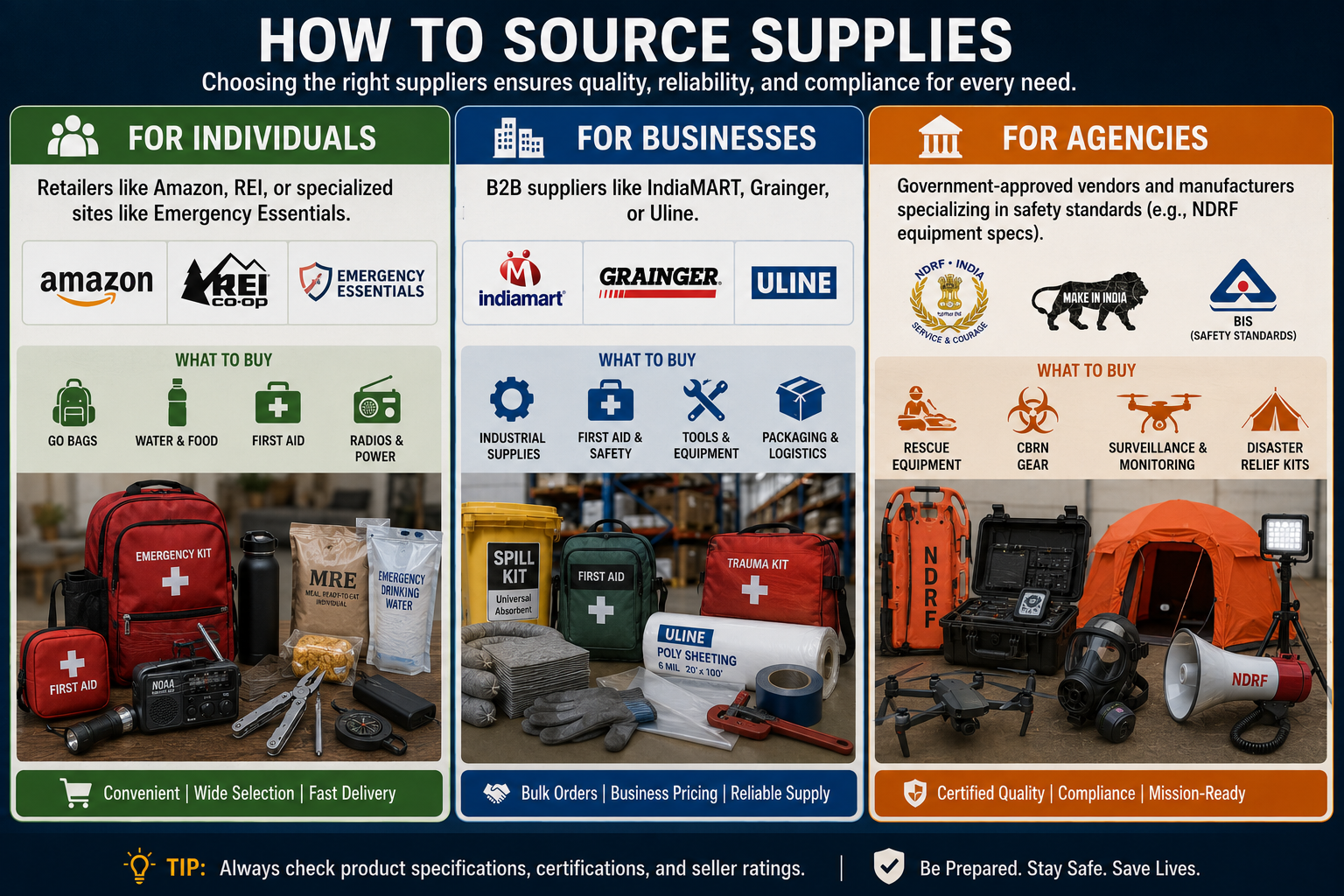
How to Source Supplies
- For Individuals: Retailers like Amazon, REI, or specialized sites like Emergency Essentials.
- For Businesses: B2B suppliers like IndiaMART, Grainger, or Uline.
- For Agencies: Government-approved vendors and manufacturers specializing in safety standards (e.g., NDRF equipment specs).